
8 min read ·
Which Horse Is Fastest Depends On The Record
Compare Winning Brew, Drip Brew, First Moonflash and Secretariat by distance, official time and record category, with the run-up caveat explained clearly.
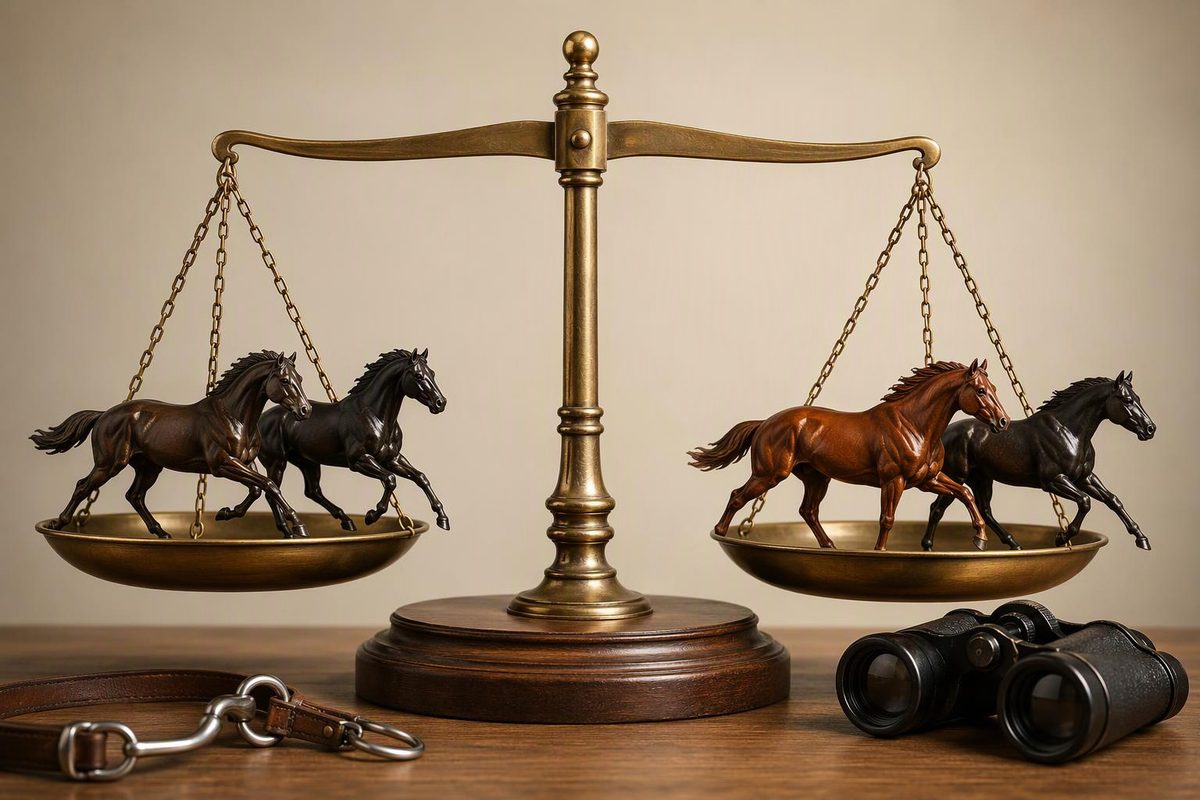
Winning Brew is the Guinness-listed fastest racehorse, but Drip Brew has the quicker two-furlong time in Equibase’s North American dirt records. Guinness lists Winning Brew at 70.35 km/h (43.71 mph), covering two furlongs in 20.57 seconds at Penn National on 14 May 2008. Equibase lists Drip Brew at 19.93 seconds for that distance. The answer to “fastest race horse ever” therefore depends on whether you mean the named Guinness record or a distance-specific racing record. Sources: Guinness World Records and Equibase North American records.
Neither listing establishes the highest instantaneous speed any racehorse has reached. Winning Brew’s published speed is an average over the timed distance, not a peak-speed measurement. Secretariat belongs in a different comparison: his record concerns sustaining speed over 1½ miles rather than covering a quarter-mile as quickly as possible.
Choose the record you mean; the result identifies the horse and the limits of the claim.
Match The Horse To The Record
Winning Brew
20.57 sec over 2 furlongs; published average 43.71 mph (70.35 km/h).
Guinness-listed holder, not proof of the highest instantaneous speed. Drip Brew has the quicker Equibase two-furlong time.
| Horse | Record Basis | Distance | Time |
|---|---|---|---|
| Winning Brew | Guinness | 2 furlongs | 20.57 sec |
| Drip Brew | N. American dirt | 2 furlongs | 19.93 sec |
| First Moonflash | AQHA world | 440 yards | 20.274 sec |
| Secretariat | N. American dirt | 1½ miles | 2:24.00 |
Winning Brew: Timing And Venue
Penn National, 14 May 2008. Fast dirt; 119lb carried; 0 feet run-up. Guinness supplies the named speed entry; Equibase’s race chart confirms 20.57 seconds and the track record.
Drip Brew: Timing And Venue
Prairie Meadows, 27 July 2020. Fast dirt; 124lb carried; 32 feet run-up. Equibase lists the North American two-furlong dirt record. The official time is 0.64 seconds quicker than Winning Brew’s, but the timed starts differ.
First Moonflash: Category And Unknowns
Sunland Park, 2009. AQHA lists the 440-yard Quarter Horse world record. Run-up, weight and gate-to-wire time are not supplied in this comparison: —. Equal distance does not make the record categories identical.
Secretariat: Distance And Average
Belmont Park, 9 June 1973. Equibase lists the North American 1½-mile dirt record; NYRA confirms the Belmont Stakes winning time. Calculated average: 37.5 mph. Peak speed: —. This trip is six times the quarter-mile distance.
Sources: Guinness World Records; Equibase North American records and race charts; AQHA world records; NYRA Belmont winners. Listings checked 1 October 2026; Equibase table dated 27 September 2026.
Four Horses, Four Precisely Defined Claims
The records below are separate categories, not an all-time ranking of racing ability. Keeping the category attached to the horse’s name prevents a short-distance clocking from being presented as proof of superiority over every distance, surface and timing system.
| Horse | Record Basis | Distance | Time |
|---|---|---|---|
| Winning Brew | Guinness speed entry | 2 furlongs | 20.57 sec |
| Drip Brew | North American dirt | 2 furlongs | 19.93 sec |
| First Moonflash | AQHA world record | 440 yards | 20.274 sec |
| Secretariat | North American dirt | 1½ miles | 2:24.00 |
Winning Brew’s performance was at Penn National on 14 May 2008. Drip Brew’s was at Prairie Meadows on 27 July 2020. First Moonflash’s 440-yard record was set at Sunland Park in 2009, as listed by the American Quarter Horse Association. Secretariat’s record was set at Belmont Park on 9 June 1973.
These listings were checked on 1 October 2026; Equibase’s table is dated 27 September 2026. That matters because “record holder” describes the cited listing at a particular point, not a guarantee that every record database has incorporated the same performances or applies the same criteria.
Two furlongs and 440 yards both equal a quarter-mile. That makes the distance labels equivalent, but it does not turn Guinness, Equibase and AQHA entries into one unified record category. Each claim should retain the scope given by its source. In particular, Equibase’s North American dirt record is not automatically a worldwide record across all surfaces.
Secretariat’s distance was six times as long. His lower average speed does not make the performance inferior to a quarter-mile sprint; it measures a different demand. A horse’s ability to sustain a pace over 1½ miles cannot be ranked fairly by placing its average beside that of a much shorter race and ignoring the distance.
Winning Brew Holds The Named Guinness Entry
Winning Brew was a two-year-old Thoroughbred filly. Her official race chart confirms a two-furlong dirt win in 20.57 seconds, a new Penn National track record. She raced on a fast track and carried 119lb.
The Guinness entry attaches its “fastest speed for a racehorse” title to that performance and publishes 70.35 km/h, or 43.71 mph. Those figures describe the recorded distance divided by the elapsed time. They do not show the speed at a particular stride, where she accelerated most quickly or how fast she was travelling at the finish.
The distinction is essential when repeating the record. “Winning Brew is the Guinness-listed record holder” is supported by the public entry. “Winning Brew reached the highest peak speed ever measured in a horse race” is a different claim, and the cited entry does not supply the instantaneous measurements needed to establish it.
Her chart also records zero feet of run-up. That detail becomes relevant when comparing her time with Drip Brew’s, because an identical official distance does not necessarily mean an identical timed start. The finishing time alone leaves that part of the comparison hidden.
Drip Brew Has The Quicker Listed Two-Furlong Time
Drip Brew’s official race chart confirms 19.93 seconds over two furlongs on fast dirt at Prairie Meadows, carrying 124lb. Equibase lists that performance as its North American two-furlong dirt record.
On the official clock, it is 0.64 seconds quicker than Winning Brew’s 20.57 seconds. That is a valid comparison of the published elapsed times. It is not, by itself, a complete comparison of the horses’ acceleration or a demonstration of which horse would win under identical conditions.
The charts show both the shared features and the differences:
| Chart Detail | Winning Brew | Drip Brew |
|---|---|---|
| Official distance | 2 furlongs | 2 furlongs |
| Surface and condition | Fast dirt | Fast dirt |
| Weight carried | 119lb | 124lb |
| Run-up | 0 feet | 32 feet |
The common distance and track-condition description make this more informative than comparing unrelated trips. The different courses, weights and run-ups still prevent it from being a controlled test. The charts do not provide a justified adjustment that converts one performance into what it would have been under the other horse’s conditions.
There is no need to dismiss Drip Brew’s record to preserve Winning Brew’s Guinness title. Both statements can be reported accurately: Winning Brew holds the named public Guinness entry, while Drip Brew has the faster time in the cited Equibase distance-and-surface category.
Run-Up Changes What The Clock Measures
Run-up is the untimed distance between the starting gate and the point where the official race distance—and timing—begins. It gives horses room to accelerate before the official clock starts. Equibase explained the distinction when announcing additional gate-to-wire times in April 2026, as reported by Thoroughbred Daily News.
Winning Brew’s chart lists no run-up; Drip Brew’s lists 32 feet. Their official two-furlong times therefore do not describe precisely the same starting arrangement. For Drip Brew, the listed run-up separates the gate from the start of the officially timed distance.
This matters especially to a claim about speed from a standing start. An official distance time and a gate-to-wire time answer different questions when there is run-up: one measures the official timed course, while the other includes the journey from the gate. Substituting one for the other would change the basis of comparison.
The available figures do not show how many seconds the run-up was worth to Drip Brew. Nor do they support subtracting a guessed allowance from Winning Brew’s time. A distance in feet is not enough to reconstruct the horse’s acceleration through that section.
Run-up also does not establish why Guinness retains Winning Brew. Its public entry does not explain the relationship to Drip Brew’s later performance, and it warns that record changes are not immediately published online. That leaves the reason unresolved. Treating run-up as the confirmed explanation for Guinness’s decision would go beyond the evidence.
The defensible distinction is narrower: Drip Brew is quicker on the cited official clock, and the two charts have different run-ups. Both facts belong beside the comparison.
First Moonflash Is The Quarter Horse Record Reference
AQHA lists First Moonflash’s 20.274-second performance over 440 yards at Sunland Park in 2009 as a Quarter Horse world record. Because 440 yards equals two furlongs, readers may reasonably notice that the distance matches the Winning Brew and Drip Brew entries.
The matching distance does not remove the category boundary. First Moonflash’s claim comes from AQHA’s Quarter Horse world-record listing; Drip Brew’s comes from Equibase’s North American dirt table; Winning Brew’s comes from Guinness’s named speed entry. Report the source and category rather than merging those labels into an unsupported universal title.
The evidence here does not include First Moonflash’s run-up, weight carried or a matching gate-to-wire measurement. Those details are unknown in this comparison. His official time can be shown, but the missing timing context should not be silently treated as identical to either Thoroughbred performance.
That is why the selector returns First Moonflash for the AQHA 440-yard question, rather than claiming that the four rows settle every possible meaning of “fastest.”
Secretariat’s Record Is For Sustained Speed
Secretariat holds Equibase’s North American 1½-mile dirt record of 2:24.00. NYRA’s Belmont Stakes winners list confirms that winning time for the 1973 race.
Distance divided by time gives an average of 37.5 mph: 1.5 miles × 3,600 ÷ 144 seconds. This calculation expresses the average speed needed to cover the recorded distance in the recorded time. It does not reveal Secretariat’s maximum speed at any instant during the race.
Comparing 37.5 mph with Winning Brew’s published 43.71 mph shows that the quarter-mile performance had the higher average over its own timed distance. It does not show that Winning Brew could maintain that average for 1½ miles, or that Secretariat’s longer performance was a lesser achievement.
For a racing comparison, match Secretariat with performances over the same trip. Our fastest Belmont Stakes times at 1½ miles keeps that distance boundary intact. The relevant distinction is between a short sprint’s average and a sustained distance record, not between a “fast” horse and a “slow” one.
None of the four records supplied here establishes an all-time peak-speed ranking. That would require evidence of maximum speed measured on a comparable basis, rather than finishing times at different distances.
A Racecard’s Speed Number Is Not Miles Per Hour
These record distinctions also explain why a racecard’s number labelled “speed” should not be read as a physical speed measurement. A raw time states how long a particular performance took under its recorded conditions. A speed figure applies a provider’s method to make performances more comparable.
For example, TrackMaster’s methodology adjusts a raw time-based figure for track, distance, surface and daily track conditions. Its figure is therefore not interchangeable with Winning Brew’s 43.71 mph or Secretariat’s calculated 37.5 mph. They are different types of number, even though all concern performance.
A British official rating is another distinct measure: an assessment on a handicap scale, not miles per hour. The BHA’s performance assessments consider course, distance, ground, relative weights and race tempo, among other factors. That description applies to the BHA’s assessment framework, not automatically to every provider’s rating.
When using a previous fast time to assess today’s race, keep the trip, course, surface, going or track condition, timing basis and weight carried attached to it. The Winning Brew–Drip Brew comparison demonstrates the problem: even two official times at the same distance on fast dirt need their run-up details before the starting conditions are understood.
Identify the provider and scale before comparing numbers across cards. Our speed-figure provider comparison explains those distinctions. For the record question, the precise answer remains Winning Brew for the Guinness entry, Drip Brew for Equibase’s two-furlong North American dirt record, First Moonflash for AQHA’s 440-yard record, and Secretariat for Equibase’s 1½-mile North American dirt record.