
2 min read ·
The Snowstorm Race Winner: Grudon, Hermit or Bloomsbury?
Grudon won the 1901 Grand National in a blizzard. If the clue specifies a British Classic, check Hermit’s 1867 Derby or Bloomsbury’s 1839 win.
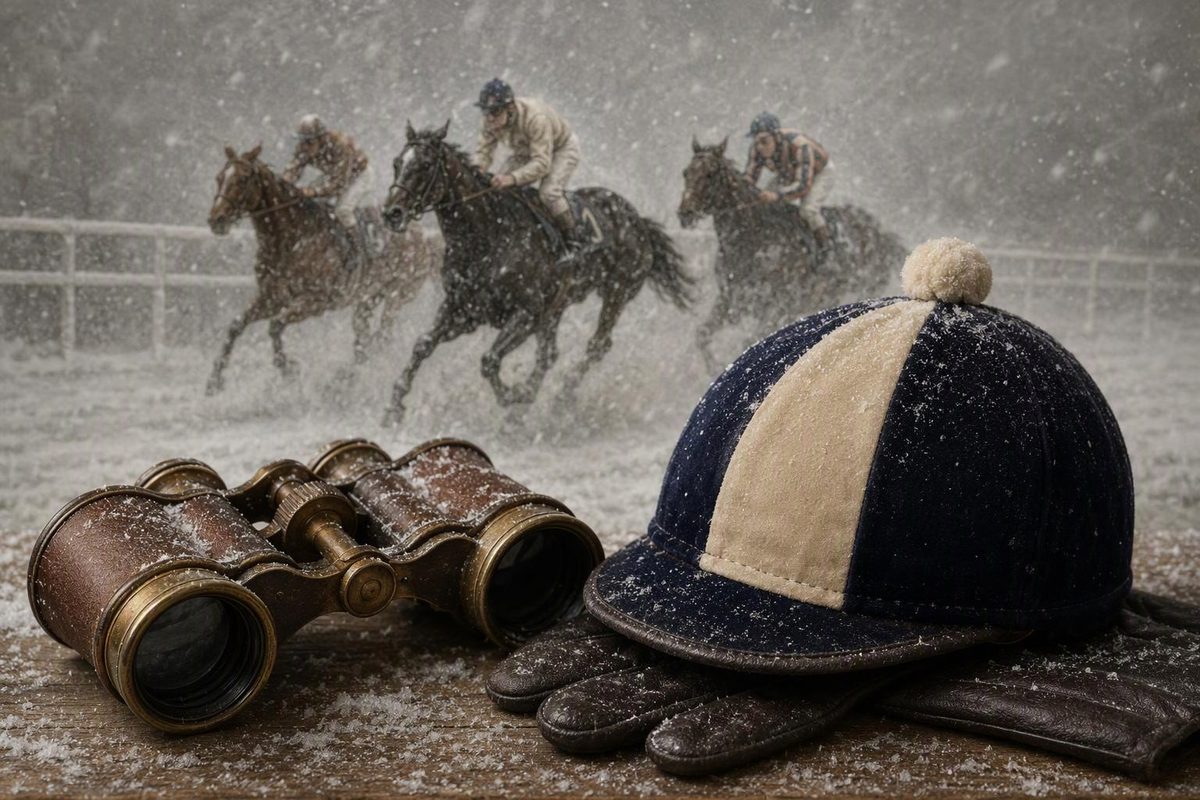
If the key clues are “early 1900s” and “won in a snow blizzard”, Grudon is a strong British racing match. He won the 1901 Grand National at Aintree with Arthur Nightingall riding. Aintree’s official historical timeline describes a snow-covered course and racing proceeding in a “ferocious blizzard” despite jockeys’ protests. Source: Aintree media guide
But “Classic winner” changes the answer. In British racing, the five Classics are the 2,000 Guineas, 1,000 Guineas, Oaks, Derby and St Leger: historic Flat races for three-year-olds. The Grand National is not one of them. Source: Great British Racing glossary
If the clue really means a Classic winner
Two nineteenth-century Derby winners fit the snow association—not the 1900s date.
Hermit: 1867 Derby, with a disputed snowstorm story
Hermit won the 1867 Epsom Derby for Henry Chaplin, trained by George Bloss and ridden by Johnny Daley. The official winners’ register records 30 runners and a starting price of 1000–15. Source: The Jockey Club
Accounts associate his victory with snowfall: Thoroughbred Heritage describes heavy snow falling steadily on Derby day. Source: Hermit’s profile
However, a retrospective item published in the New Zealand Graphic on 8 July 1908 challenged the snowstorm story. It reproduced a correspondent’s account said to rest on the authority of Hermit’s owner. That account described rain, sleet, hail and a few snowflakes before the start, but said nothing fell while the race itself was running. Hermit is a plausible answer to a snow-associated Classic clue, but “won during a blizzard” should not be presented as settled fact. Source: archived newspaper item
Bloomsbury: 1839 Derby in a snowstorm
Bloomsbury won the 1839 Epsom Derby. Derby historian Michael Church dates the race to 15 May and describes it as being run in the severest snowstorm of that year. The Jockey Club’s winners’ register confirms Bloomsbury, jockey Sim Templeman, 25–1 odds and 21 runners. This is the clearer fit if the essential clue is a Derby victory actually run in snow. Historian’s account · Official winners’ register
Reading Grudon’s 1901 result
Grudon’s historical result also illustrates why race-record fields must be read separately. Aintree’s roll of honour gives the following data. Source: official media guide, roll of honour
| Field | Grudon’s entry | Meaning |
|---|---|---|
| Age | 11 | His racing age, not a rating |
| Carried weight | 10 st 0 lb | 140 lb carried in the race |
| Going | Snow | The historical table’s recorded condition label |
| Winning time | 9m 47.80s | Elapsed race time, not a speed figure |
| Runners | 24 | The starting field, not the number of finishers |
Going means the condition of the racing surface, rather than simply the weather overhead. British descriptions range from heavy to firm. A historical entry labelled “Snow” should therefore be preserved as recorded—not silently converted into “heavy”. Source: Great British Racing glossary
Nor does one snowstorm victory establish a repeatable preference for particular going. When comparing form, keep the surface description, distance, carried weight and race type alongside the finishing position. Our racecard-reading guide explains how those fields work together; the Grand National winners’ record provides the wider historical context.